Reminder: Show & Tell this Sunday, December 2! Join the Fun!

By Grace Maselli

Reminder: It’s Show & Tell potluck time! Bring us your quirky and nostalgicyour cornball and wistful. We welcome it all!

Date Sunday, December 2, 2018
Time 3 to 6 PM
Address 2128 Park Crescent Drive
Land O Lakes, FL 34639
Questions? Give Grace a shout-out at 215.834.4567


Our Show & Tell potluck comes straight out of the pantheon of classroom classics. But the one on December 2 is for big kids. So whether you want to bring the rutabaga you grew from seed, a lace doily tatted lovingly from scratch, miniature doll furniture made of walnut shells and tree sap, or the photo of Clark Gable’s Cadillac you snagged at the Clark Gable Birthplace Museum in Cadiz, OH, then cool! Come to Show & Tell and share memories, dreams, losses, and gains. Tell us why you picked what you picked. What about  it speaks to you? We want to know. Because no matter your age, connecting, communicating, sharing ideas and objects—can pique curiosity, give license to expression, and open doors to audience interests. Bring some grub and a friend too who may be interested in learning more about timebanking as we move into the future with our TBT revitalization efforts.

What’s Real Wealth Anyway? Philosophy Plus Edgar Cahn in a 2018 Forbes’ Podcast Lend Insight

By Grace Maselli


In the words of British-American philosopher Alan Watts, “Thoughts and words are conventions…and it is fatal to take conventions too seriously.” He used money as a case in point in his 1951 book, The Wisdom of Insecurity, A Message for an Age of Anxiety. “Money gets rid of the inconveniences of barter,” Watts offers. “But it is absurd to take money too seriously, to confuse it with real wealth, because it will do you no good to eat it or wear it for clothing. Money is more or less static, for gold, silver, strong paper, or a bank balance can ‘stay put’ for a long time. But real wealth, such as food, is perishable. Thus a community may possess all the gold in the world, but if it does not farm its crops it will starve.” A relatable point. And the last time I tried to make stew out of $5 bills, it was lousy.

Watts’ caveats beg additional questions:

• Have you ever known anyone who takes money too seriously?
• Have you yourself been anxious about money?
• Have you thought about this recently, as we immerse ourselves in the holiday season and dreams of a magnetic floating bed for $1.6 million? (Yes, it’s true. Such a thing exists.)
• What is real wealth anyway?
• Is it more than moolah?
• Has your view of it changed over the past 10 years?
• The past 20?
• How do you think about children, teenagers, mothers, and seniors in the context of money-making and “wealth?”
• Do you have wealth in health? In a support system? As a way in which you express and exchange usefulness in society, and in your local community?

A Baby Gets Birthed at the London School of Economics

Edgar Cahn, Timebank founder who is now 82 years old, was interviewed earlier this year by Forbes magazine and has long thought outside the polyhedron when it comes to the issue of money and its power, if left unchecked, to define worth. “All sorts of things don’t get valued in our current economic system, despite having tremendous value. Notably, the unpaid work of mothers to care for, educate, and otherwise support their children.” A podcast with Edgar and Forbes’ Devin Thorpe explores timebanking, an economic model that Edgar initially took to the London School of Economics for feedback and legitimacy (read: a reality check) when he was first birthing his brainchild.

These days the baby is all grown up. “There are over 500 timebanks in the U.S. and at least an equal number spread out over 38 countries,” Edgar says in the podcast. “In Wales, [timebanking] is recognized formally by the national government. Scotland just had a two-week celebration of timebanking and ‘co-production’,” he adds.

Three things undergird timebanking, Edgar says:

  1. Core Economy: There’s an economy we undervalue and take for granted known as “unpaid labor”: This economy raises children, makes strong families, makes neighborhoods safe, makes Democracy work, and keeps the planet sustainable. It’s the ecosystem that’s as basic as the ozone layer we took for granted,” he adds. “We need this ecosystem as human beings,” and, There is a larger economic system than that which is driven and counted by money.”
  2. Currency: “Money does some good things and some strange things,” Edgar says. “Money defines value by price. So if it’s scarce, it’s valuable [think a magnetic floating bed]. If it’s more abundant…it’s dirt cheap or worthless. [This translates to mean] that being a human being is worthless,” given the abundance of humans on the planet, he says. When we “listen to each other, care for each other, come to each other’s rescue, stand up for what is right, oppose what is wrong,” we are coming together as the social animals we are, and timebanking is a system that honors and valuesassigns worth to all this. And therefore assigns worth to all people by designing a different type of currency where one skill hour is worth exactly the same as another skill hour and gets exchanged equally within the timebank system. In other words, an hour of childcare is worth the same as an hour of work on an architectural plan.
  3. Co-Production: “We must enlist the persons whom we’re trying to help as our partners or we can’t succeed,” says Edgar about a core timebanking principle. Timebanking is based on this give-and-take, a partnership of skills exchanges to benefit everyone who’s bought into (no pun intended) the model. People in timebanks have partnered with others to help them in their life “processes.” This can extend to health recovery, lowered rates of recidivism in drug addiction and mental illness relapse, creation of civic patrols in neighborhoods to help make them safer, among countless other examples. Timebanks can be used to “build and meld” community, Edgar says, “and as a stream to generate specific programs.”

Listen to the podcast and keep an ear open for “homecomers.” Consider what it might mean in the context of real wealth, and if you believe there are some things that exist beyond quantification in dollars and cents. The takeaway from Edgar: “We have what we need if we use what we have.”


A Quick Recap: Tuesday’s Early Bird—and the Significance of Florida’s St. Augustine as We Dive into Celebration and Remembrance

By Grace Maselli


Our early bird potluck meal and membership meeting on Tuesday, November 20 rocked the house. Or just as aptly, filled Tampa’s  Life Enrichment Center where we meet every third Tuesday of the month with a razzle dazzle of Thanksgiving food and conversation. Idea sharing encompassed core timebank concepts including the belief that people are our greatest assets, and that we’re here to help one another by offering services we’re drawn to provide because they bring a sense of efficacy and joy. And all without an exchange of wampum. Of course, center stage was turkey, accompanied by mashed this and that, salads, veggies, and broccoli and cheddar scrumptiousness, along with pie, pie, pie.

Florida Factoids

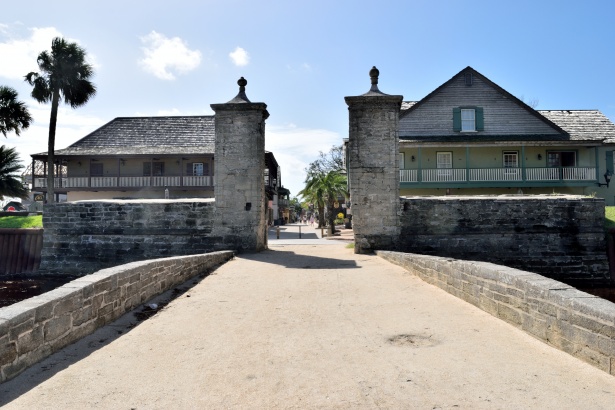
According to some historians and Thanksgiving aficionados, Plymouth, MA in 1621 was not where the first celebratory meal was shared between colonists and Wampanoag Indians. Rather, roll it back by an approximate half century to 1565 when a boat load of Spaniards came ashore to Florida’s very own St. Augustine where the Europeans broke bread with the native Timucuan people.

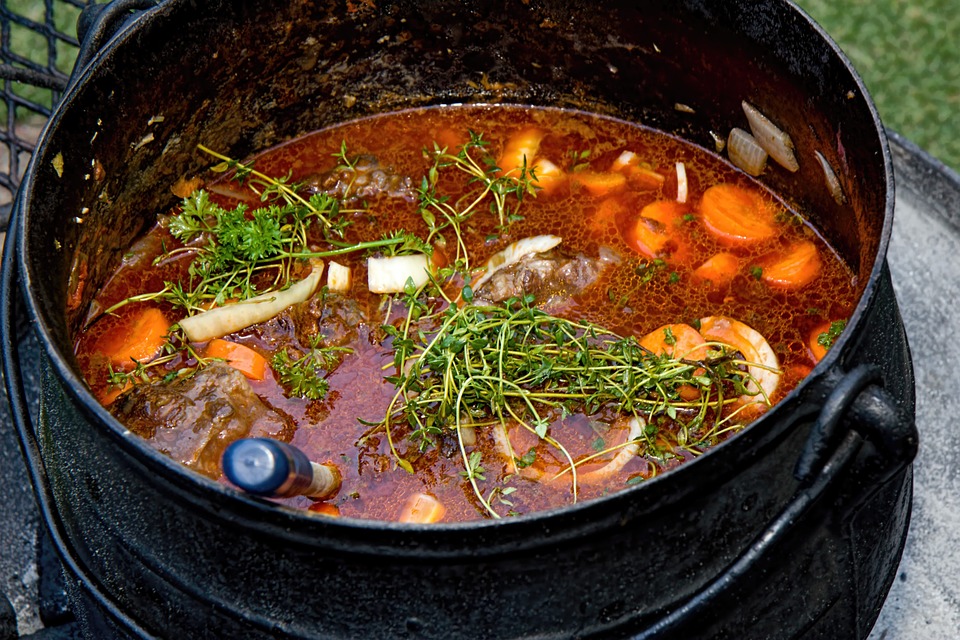
You can also forget the bird 450+ years ago. The History Channel says what was served up “lacked most of today’s typical Thanksgiving dishes, but it did feature a traditional post-Thanksgiving staple—leftovers. Unlike the Pilgrims, who served food freshly harvested from American soil, the Spanish were forced to make do with whatever provisions survived the long voyage across the Atlantic Ocean. According to Robyn Gioia, author of the children’s book America’s REAL First Thanksgiving, the European colonists likely ate hard biscuits and cocido—a rich garbanzo stew made with pork, garlic, saffron, cabbage and onion—washed down with red wine.” Delicioso!


Gratitude, Celebration of Life, and a Reminder: Join Us Tonight for a Shared Potluck Table!

By Grace Maselli

Lest we forget-ski, members and friends, please know how welcome you are!!
Join us tonight at a shared, festive, pre-Thanksgiving potluck table! We’d love to see you.
Here’s the skinny (and the turkey fat):

Date Tuesday, November 20, 2018
Time 6:30-8:30 PM
Address 9704 North Boulevard, Tampa, FL 33612; phone: 813.932.0241.
Questions? Contact coordinator@tampabaytime.org or call (215) 834-4567 and reference our Thanksgiving potluck at LEC

And now onto classic poems for the season, the first by Ella Wheeler Wilcox who started writing in the late 1800s in celebration of gratitude and living in the present moment with appreciation.

Thanksgiving

We ought to make the moments notes
Of happy, glad Thanksgiving;
The hours and days a silent phrase
Of music we are living.
And so the theme should swell and grow
As weeks and months pass o’er us,
And rise sublime at this good time,
A grand Thanksgiving chorus.


Our second poem is by Maude Margaret Grant, writing more than 77 years ago.


A Thanksgiving Dinner

Take a turkey, stuff it fat,
Some of this and some of that.
Get some turnips, peel them well.
Cook a big squash in its shell.

Now potatoes, big and white,
Mash till they are soft and light.
Cranberries, so tart and sweet,
With the turkey we must eat.

Pickles-yes-and-then, oh my!
For a dessert a pumpkin pie,
Golden brown and spicy sweet.
What a fine Thanksgiving treat!


Acorns, vegetables, gravy, oh my!

“Investopedia” and the Meaning of Life

By Grace Maselli

Investopedia is a New York City-based website that zeroes in on investing, finance education, and analysis. The website was founded about 23 years ago by IAC, a company with the most recently available 2016 revenues listed as $3.14 billion and 5,800 employees. Site administrators have included timebanking in their lexicon, defining it thusly: “[It] is a reciprocity-based work trading system in which hours are the currency. It is a form of community currency, which enables a person with one skill set to trade hours of work with someone with another skill set, without any money changing hands.”

Investopedia takes a closer look at the mechanics of the Edgar Cahn-created timebanking model: “Time banking has spread to communities around the world, because it helps to foster community ties and attracts people who would not normally get involved in traditional volunteering.The services traded focus on community outreach, such as the care of the elderly, social work and home repair, and it enables people on low incomes to access services that would be unaffordable to them in the traditional market economy.”

The Investopedia look-see into timebanking likewise includes its five key principles: 

  1. We Are All Assets: Everyone has something to contribute
  2. Redefining Work: Rewards all work, including non-paid and care work
  3. Reciprocity: Helping each other builds strong relationships, and community trust
  4. Social Networks: Belonging to a social network gives our lives more meaning
  5. Respect: Respect is the basis for healthy and loving community, and lies at the heart of democracy

The review of key principles inspires a deeper dive. Thanks to timebanking and its emphasis on belonging, here are some questions to consider as we cross the threshold into the holiday season and move toward the conclusion of 2018.

• What’s the most meaningful thing that happened to you so far this year?
• What inspired you?
• What gave you a sense of strength?
• Are you using your strengths, applying them in your daily life?
• Have you found  your tribe?
• Do you feel understood and valued by the people you surround yourself with?
• Do you tell yourself positive or negative “stories” about who you are as a person in the world?
• Do you take account of the ordinary, wonderful moments in everyday life?

Check out the VIA Institute on Character’s free “Character Strengths Study” to explore your areas of strength. You might find some happy surprises there!


Timebanking Saved Me from Going Astray

By Grace Maselli


Ah, the holidays. They’re like petri dishes, perfect for growing some feelings. Some happy. Some, less so. This Thanksgiving my teen kids will be with their father. My family of origin is in New England where I hail from. I’ll be here, in Tampa Bay. Technically, this makes me one of the proverbial holiday stray. When I stopped to think about the word stray, and actually looked it up in my trusty dictionary,  the connotation was clearer than ever. In verb form, it’s “to move away aimlessly from a group or from the right course or place.” As an adjective, it’s “not in the right place; separated from the group or target.” Synonyms are “homeless” and “waif.”

Hmm.

I’m happy to report, dear reader, that rather than go astray I will, in fact, be in the right place. My Thanksgiving will be spent this year with timebankers from within and around the Tampa Bay area. Nothing aimless about that. I also have it on good authority that sometimes being the “target” may not always yield the best outcome. So pooh pooh to the language of strays this holiday season, because timebanking has brought me into the fold, connected me to kind friends and welcoming peeps. Gratitude doesn’t begin to fully express the appreciation I feel, not to mention anticipation at eating dee-lish foods at a shared, collaborative table.

This is not insignificant in the face of the loneliness epidemic in our country. According to Ken Burdick, CEO of Tampa-headquartered WellCare Health Plans, Inc. in one of his recent blog posts, “Loneliness poses the same health risk as smoking 15 cigarettes a day. In fact, new research indicates weak social connections and feelings of extreme isolation could shorten a person’s life by 15 years. With more than one-third of U.S. adults age 45 or older indicating they are lonely, we’ve reached a critical number of individuals who are at risk for serious health outcomes.” Let’s ponder this while we slip into our stretchy pants and dive into some green bean casserole and pumpkin pie.

Ken goes on to say that persistent loneliness spikes risk for heart failure and cognitive decline. It’s also expensive to be lonely. “Beyond the health-related impact, social isolation and loneliness also have enormous fiscal implications. Every month, Medicare spends $134 more for socially isolated older adults than those adults who are more connected to their communities. This additional care translates into an estimated $6.7 billion in Medicare spending annually,” he says, positing that the health insurance industry needs to examine the issue to tee up some change. Among others, he writes to these verbatim specifics; take note of “Social Connections” in particular:

  • Care in the Home. We must leverage care at home or outside of a clinical setting with support like the Program for All-inclusive Care for the Elderly (PACE), a federal initiative offered through a combination of Medicare and Medicaid funding. The goal is to keep seniors in their homes versus a nursing home. The program also comprises 255 PACE day centers called “PACE without Walls.”
  • Social Connections. We need to help members build a stronger community – being connected is one of the leading predictors of extended life.
  • Caregiver SupportWe must also look at programs to address the impact loneliness is having on caregivers and their ability to assist. Some of the ways WellCare supports caregivers include paid training courses, certifications to enable pay for services and care management support.

Timebanking’s got a 30+ year jump on helping people in communities around the world make deeper social connections, build a stronger network of kindred spirits and people to weed wack for or eat turkey with. (Or just the roasted sweet potatoes and corn, if you’re vegetarian or vegan.) I for one will think twice before pulling the word “stray” from the rotating file of choices in my head, before pairing it with a fine brussel sprout varietal and extra fluffy mashed potatoes, among other serious eats. Let’s raise a glass together to keep the old (or young) ticker pumping with joy.


Gobble Gobble

By Grace Maselli

Join us for a member meal and gratitude. TBT is celebrating appreciation and membership on Tuesday, November 20th at our Third Tuesday of the Month gathering at Tampa’s Life Enrichment Center (LEC). In the spirit of sharing, this November we’re having an early Thanksgiving potluck, complete with all-natural turkey from Sprouts Farmers Market to proclaim our gratitude for life, love, chocolate bonbons, and thoughts of A People’s History of the United States remembered at the collective table. Friends welcome!


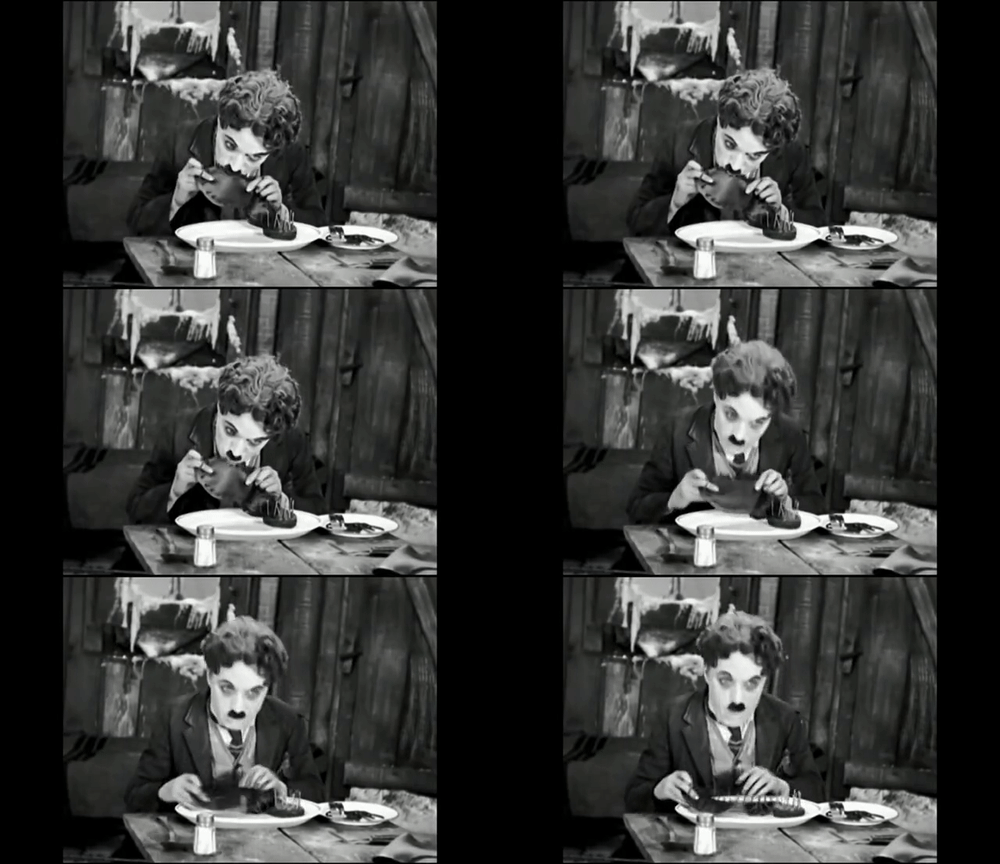
Our happiness extends to joyous circumstances that mean we’ll have more soulful stuff to chew on than Charlie Chaplin’s Thanksgiving boot. Join the potluck sans boiled footwear, share your favorite holiday dish and an impromptu tale about amusing Thanksgivings Past, and let’s offer special thanks to timebanking! You can check out our Tampa Bay Time Bank Flyer too for a handy reminder of our Third Tuesday activities.

Date Tuesday, November 20, 2018
Time 6:30-8:30 PM
Address 9704 North Boulevard, Tampa, FL 33612; phone: 813.932.0241.
Questions? Contact coordinator@tampabaytime.org or call (215) 834-4567 and reference our Thanksgiving potluck at LEC


One Small Step for the “Whole System Team,” One Giant Leap for TBT

By Grace Maselli

The eagle has landed, dear readers. Today TBT took a giant leap forward in support of our growth, momentum, resurgence, and reawakening, or what we like to call, “The TBT Revitalization Project.” Today, at the groovy Kaleisia Tea Lounge in Tampa, the venerable “Whole System Team,” complete with veteran players, consultants, and would-be new team mates, met to put their collective heads together, nosh on spring rolls, and throw back cups of iced orange Creamsicle tea. Wide-ranging discussion included improved communications and an expanded advisory group. On the docket are methods to recruit new members and how to expand working together with community partners, among other examples of expansive and inclusive thinking. In other words, big doings as we shoot for the moon.

Stay tuned for progress reports. Meanwhile, the Whole System Team will be revamping, rejiggering, re-arranging. You get the idea. And speaking of ideas, don’t hesitate to throw your two cents in. All member thoughts most welcome. Contact coordinator@tampabaytime.org or drop us a line on Facebook. 


Bliss, Contentment, Delight—No Matter the Synonym, It’s Tied to Timebanking

By Grace Maselli


The happiness factor. Immediately below the surface of the timebanking philosophy is where the happiness factor lives. Briefly, the philosophy is underpinned by a belief that “wealth” is intrinsic to the economy’s people who have innate worth and dignity. The basic piece of the happiness factor is that giving to othersthrough interaction and proximity, having  ties and tethers and face-time in the dimensional (non-virtual screen-focused) world with other human beings, contributes to their peace of mind and optimism and other people’s, givers’, own well-being.

The timebank philosophy expands this notion of unconventional wealth by assigning value to everything we do as humanoids: provide emotional support, caregive, check in on our neighbors. Happiness can be derived through the timebank’s system of services exchange that goes beyond cash-ola, and which might include hours earned for giving someone who needs it a ride to a doctor’s appointment. Or bringing a person chicken soup. Let your skill set and imagination be the guide, the philosophy elicits!

YES! magazine provides data points. “One person’s happiness triggers a three-degree chain reaction that benefits not only their friends, but their neighbors’ friends and their friends’ neighbors’ friends.” The article goes on to given percentages of happiness increases by categories linked to interaction and proximity as it relates to happy people:

Being near one happy person increases happiness for:

Neighbor

Spouse Sibling living
within a mile

Friend living
within a mile

34%

8% 14%

25%

In other words, prosperity in the land of timebanking is directly correlated with support for each other. Being seen and heard and helped builds our reservoir of collective good and puts a smile on the doer’s and the receiver’s face. Yippee! According to YES! magazine, it’s official, “Giving to others increases our own happiness.” And it has an exponentially positive effect…

Save the Date: Open Mic Night Coming to Tampa Sunday, November 11

By Grace Maselli

The phoenix is on the rise again. Karen Lowman, founder of Sacred Grounds Community, is spearheading an inaugural gathering in partnership with TBT after the closing two years ago of her venerable Sacred Grounds Coffee House in Tampa. The latter opened its doors to students, artists, poets, and all manner of citizens who hung out on sofas and comfy chairs in what was a 20-year run of java, confection, and connection to the local scene.

In the spirit of Karen’s original Sacred Grounds, the November 11 Open Mic event is for one and all. It’ll  be held at Tampa’s riverfront Waterworks Park. Bring us your jokes and songs. Your juggling paraphernalia. Play an instrument, or read a spoken-word poem. Run some new material by a welcoming audience. Toss your Frisbee and soccer ball in a bag and head on over, and bring your friends too!

Plan to project your voice because the grassroots gathering in front of the Waterworks’ amphitheater/auditorium in the small open field will have no amplification. Don’t forget a blanket or chair. Bring your creativity and energy and a brown bag filled with your favorite portable foods.  If you have a hankering for something gastronomic, you’ll be within walking distance of Tampa’s Armature Works and Ulele’s for amazing food. Here’s a recap:

Date Sunday, November 11, 2018
Location Waterworks Park
1710 North Highland Ave.

Tampa, FL 33602
Time 5:30 to 9:30 PM